
How to Run an Influencer Campaign End-to-End — The SMB Playbook
Most small businesses either overpay for reach they can't measure, or underinvest and call it a failed experiment. This guide is the third option.
Here's a truth most agencies won't tell you: you don't need a big budget, a celebrity influencer, or a six-month strategy deck to make influencer marketing work. You need a clear goal, a decent brief, and a creator whose audience actually trusts them.
This guide walks you through all five phases of an influencer campaign — from the first spreadsheet to the final report — in the order you actually need to do them. It's built for marketing managers at SMBs who are running lean, time-poor, and tired of vague advice.

Why Influencer Marketing Works for SMBs (When Done Right)
The misconception is that influencer marketing is for brands with six-figure budgets and a PR team. In reality, small businesses often get better results than big brands — because they can work with nano and micro-influencers whose audiences are tight-knit, engaged, and actually buy things.
Here's the mechanic: a creator with 8,000 followers in your niche has built a relationship of trust with their audience over months or years. When they recommend your product, it carries the weight of a personal recommendation — not a banner ad. That's what you're buying. Not impressions. Trust at scale.

Influencer tiers at a glance
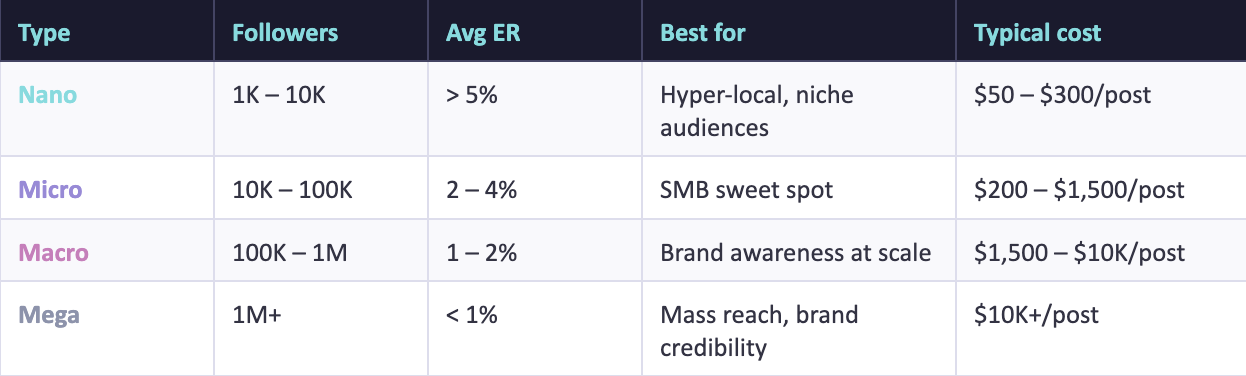
For most SMBs, the nano-to-micro range is where the money is. Lower cost, higher engagement, easier to build a real working relationship. Start there — and scale up only when you have data proving it's worth it.

Before you spend a cent, get crystal clear on the why.
Before you open Instagram or a creator marketplace, you need to answer one question: what does success look like? Not "we want more awareness" — something measurable. Something you can point to in 30 days and know whether it happened.
Set one primary goal
Influencer campaigns work best when they're optimised for one thing. Pick the one that fits where your business is right now:
- Awareness: you're new, entering a market, or launching a product. Metric: reach and impressions.
- Engagement: you want community growth and content. Metric: comments, saves, shares.
- Conversion: you want direct sales. Metric: promo code uses, link clicks, actual revenue.
PRO TIP
Write your goal as a SMART target before you do anything else. Example: "Generate 50,000 impressions within 30 days using 3 micro-influencers in the fitness niche, at a CPM below $0.02." That's a brief in one sentence.
Budget planning — the honest version
Most SMBs underestimate the full cost of a campaign. Here's how to split it:
Creator fees (70%) ████████████████████████████░░░░░░░░░░░░ 70% The bulk of the budget — this is what gets results
Paid boosting (20%) ████████░░░░░░░░░░░░░░░░░░░░░░░░░░░░░░░░ 20% Boost top content to lookalike audiences — doubles ROI
Tools & tracking (6%) ██░░░░░░░░░░░░░░░░░░░░░░░░░░░░░░░░░░░░░░ 6% Tracking links, basic analytics tools
Contingency (10%) ████░░░░░░░░░░░░░░░░░░░░░░░░░░░░░░░░░░░░ 10% Something always costs more than expected
The 20% for paid boosting is non-negotiable if you're running a conversion campaign. Boosting a creator's top post to their lookalike audience consistently doubles results. Don't skip it.

Follower count is vanity. Engagement rate is sanity.
The biggest mistake SMBs make in influencer marketing: choosing creators based on follower count. A 9,000-follower creator with 6% engagement will outperform a 200,000-follower creator with 0.5% every single time — and cost 20× less.
Where to find candidates
- Search niche hashtags and see who's already talking about your category
- Check your competitors' tagged posts — they've done some of the research for you
- Free tools: Modash (free tier), Heepsy, or a simple Instagram or TikTok search
- Ask your own customers — your best advocates are probably already in your audience
- Look at adjacent niches — a sustainable fashion creator might be perfect for an eco food brand
Build a shortlist of at least 20 before you start vetting. You'll disqualify most of them.
The engagement rate cheat sheet
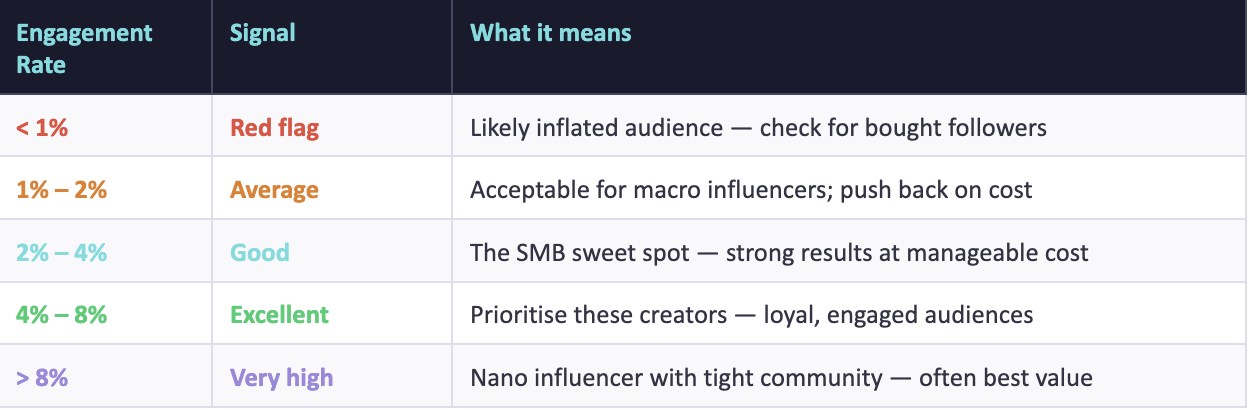
⚠ RED FLAGS — WALK AWAY IF YOU SEE THESE
High follower-to-like ratio. Sudden follower spikes (check with HypeAuditor). Comments that are only emojis or generic phrases ("great post!"). Audience location that doesn't match your market. No FTC disclosure on past brand posts.

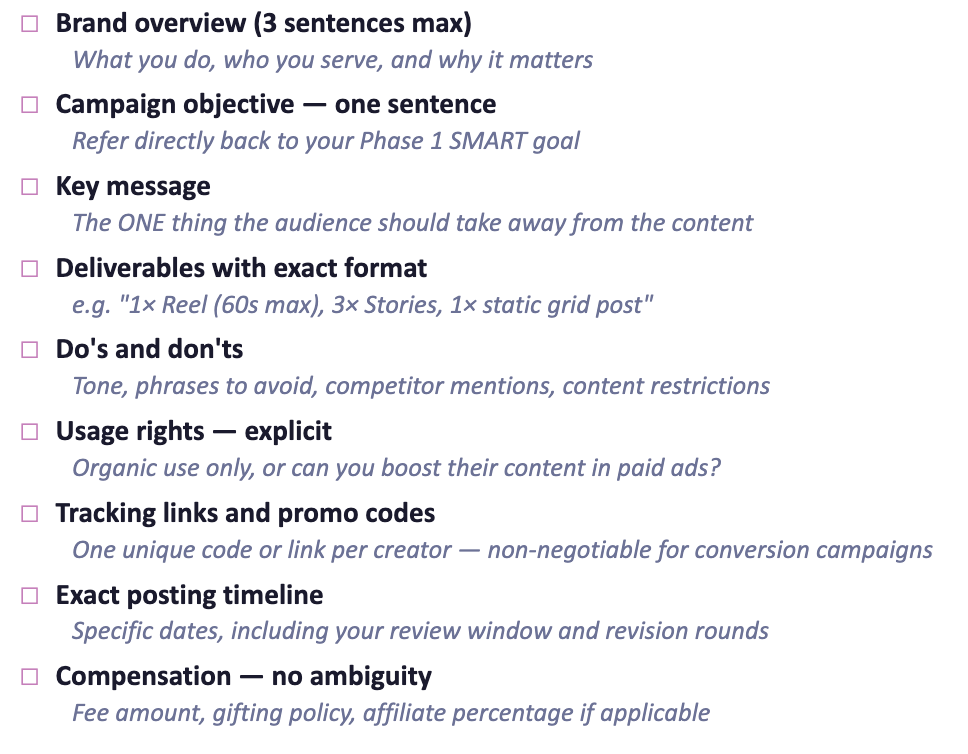
Write the brief before you contact anyone. A vague brief produces content you can't use, disputes about deliverables, and missed deadlines. Every element below needs to be in writing before you send a single DM.
What every brief must include
The outreach formula that gets replies
OUTREACH FORMULA
Line 1: Reference something specific they've posted (not "love your content").
Line 2: Why their audience would genuinely benefit — not why your brand would.
Line 3: The ask — keep it simple and low-commitment. Total length: under 100 words. Follow up exactly once, 5 days later. After that, move on.

This is where most campaigns quietly fall apart.
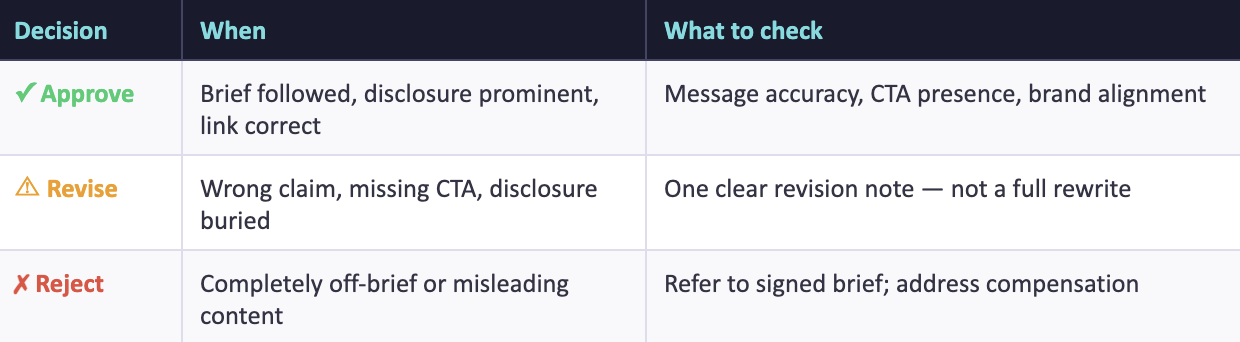
Not with a dramatic failure — just a slow erosion of details. The link that wasn't set up. The disclosure that got buried. The screenshot that nobody took before the Story disappeared.
Content approval framework
During the campaign
- Monitor comments for the first 24 hours. Be ready to respond as the brand if needed.
- Screenshot all Stories before they expire. They disappear in 24hrs and you'll want them.
- Note organic comments mentioning the product. Gold for future testimonial use.
- Don't ask the influencer to edit live content unless it contains a factual error or is genuinely harmful.
- A like and comment from your brand account costs nothing and shows the creator you care.

If you don't measure it, you'll repeat the mistakes.
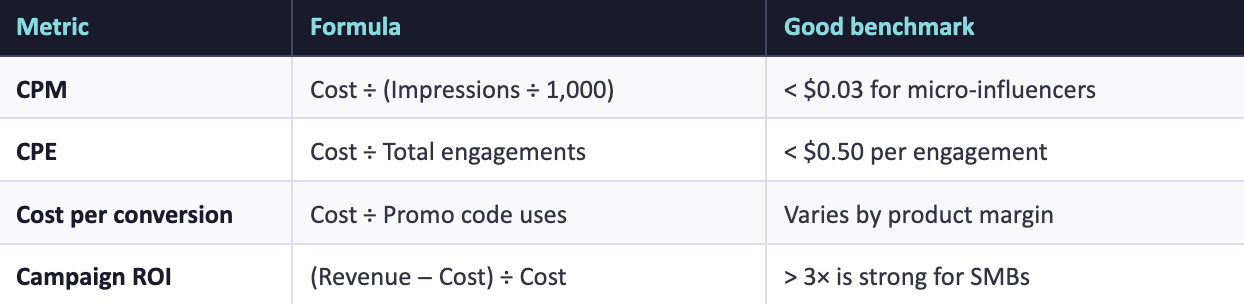
The reporting phase isn't a formality — it's where you learn whether to re-book a creator, what content format to double down on, and whether the campaign actually moved the needle on your business goal.
Metrics to collect from every creator
- Total reach and impressions — unique accounts vs. total views
- Engagement rate — (likes + comments + saves + shares) ÷ reach
- Saves — the most underrated metric; high saves = real purchase intent
- Link clicks or promo code uses — your direct conversion signal
- Story views and swipe-up rate — if applicable
- UGC captured — how many pieces can you repurpose for ads?
The numbers that matter
THE ONE DOC YOU MUST WRITE
One page. What worked. What didn't. Which creator to re-book. What format performed best. What you'd change about the brief. Write it within 7 days of campaign end, while context is fresh. Future you will be genuinely grateful.
Frequently Asked Questions
How much should a small business spend on influencer marketing?
Start with $500–$2,000 for a first campaign using nano and micro-influencers. Split your budget roughly 70% on creator fees and 20% on paid boosting of top-performing content, with 10% held as contingency. Most SMBs who start small and measure carefully scale up fast after a first successful campaign.
What is a good engagement rate for influencer marketing?
For nano-influencers (1K–10K followers), above 5% is excellent. Micro-influencers (10K–100K) should show 2–4%. Anything below 1% is a red flag regardless of follower count — check for inflated audiences using tools like HypeAuditor or SparkToro.
How do I find influencers for my small business?
Start by searching niche hashtags on Instagram or TikTok. Check who your competitors tag in brand partnerships. Use free tiers of tools like Modash or Heepsy. And don't overlook your own customers — your most engaged buyers are often natural advocates who'd love to collaborate.
Do I need to sign a contract with influencers?
For any paid collaboration, yes — even a simple one. At minimum, get agreement in writing (an email chain counts) covering deliverables, timeline, compensation, usage rights, disclosure requirements, and revision policy. For anything over $500, use a simple one-page contract.
Is influencer marketing worth it for B2B companies?
Yes — but the platform shifts. LinkedIn is where B2B influencer marketing lives. Industry experts, consultants, and thought leaders with engaged professional audiences can drive significant awareness and lead generation. The same principles apply: engagement over follower count, clear brief, tracked outcomes.
Ready to run your first campaign?
Brand Lifts builds influencer and advocacy programs for SMBs that survive past the first campaign — with the content infrastructure to back it up.
Let's talk!